
10.0.0.1 Admin Login
Learn how to access the 10.0.0.1 admin panel for router and Piso WiFi management. Find login instructions, default usernames and passwords, network setup tips, WiFi security guides, and troubleshooting solutions to manage your connection with confidence.
The 10.0.0.1 Admin Login page is used to access the administrator dashboard of many routers, gateways, and Piso WiFi systems. Once logged in, you can manage your wireless network, change your WiFi password, configure internet settings, monitor connected devices, and improve your network security. Whether you are setting up a new router or troubleshooting an existing connection, the administrator panel provides complete control over your local network.
The IP address 10.0.0.1 belongs to the private IPv4 address range reserved for local area networks (LAN). Unlike a public IP address, it cannot be accessed from the internet. It only works when your computer, smartphone, or tablet is connected to the same router or Piso WiFi network.
Many users mistakenly type 10.0.0.0.1, which is not a valid private IP address. The correct address is 10.0.0.1. Even a small typing mistake will prevent the login page from opening.
In this guide, you will learn how to access the 10.0.0.1 Admin Login page, find the correct username and password, configure router settings, manage Piso WiFi features, solve common login problems, and secure your network using simple step-by-step instructions.
What is 10.0.0.1?
10.0.0.1 is a private IP address commonly assigned as the default gateway for routers, broadband gateways, and Piso WiFi systems. It serves as the entry point to the router’s administrator dashboard, where users can configure almost every aspect of their network.
Private IP addresses are reserved for local communication inside homes, offices, schools, and businesses. Because they are not publicly accessible, they provide an additional layer of security while allowing devices on the same network to communicate with the router.
After logging in to the 10.0.0.1 Admin Panel, you can:
- Change the WiFi password.
- Rename your wireless network (SSID).
- View all connected devices.
- Block unauthorized users.
- Configure DNS settings.
- Enable Guest WiFi.
- Update router firmware.
- Configure parental controls.
- Restart or reset the router.
- Manage advanced network settings.
For Piso WiFi owners, the same dashboard can also be used to configure internet time, vouchers, user access, and network management options.
How to Access the 10.0.0.1 Admin Login Page
Logging in to your router or Piso WiFi admin panel is simple if you follow the correct steps.
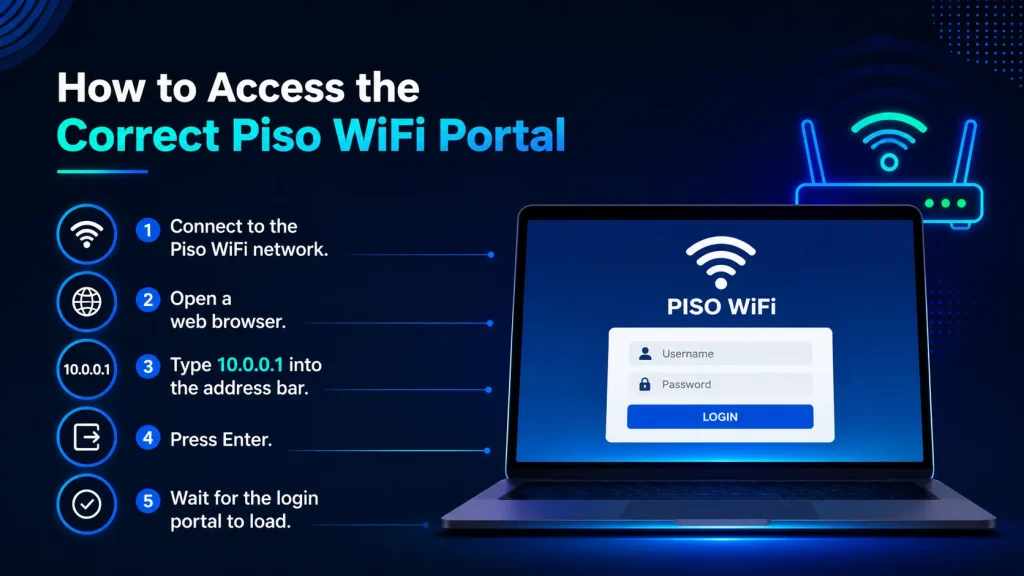
Step 1 – Connect to Your Network
Before opening the login page, make sure your computer or smartphone is connected to the router using either:
- WiFi
- Ethernet cable
If your device is connected to another network, the login page will not load.
Step 2 – Open Your Browser
Launch any modern web browser such as:
- Google Chrome
- Microsoft Edge
- Mozilla Firefox
- Safari
Always type the IP address directly into the browser’s address bar instead of using a search engine.
Step 3 – Enter the Correct Login Address
Type:
Then press Enter.
If your router uses 10.0.0.1 as the default gateway, the administrator login page will appear within a few seconds.
Important: Do not enter 10.0.0.0.1 because it is an incorrect IP address and will not open the router login page.
Step 4 – Enter Your Login Credentials
Once the login page appears, enter the administrator username and password.
Many routers use one of the following default credentials:
| Username | Password |
|---|---|
| admin | admin |
| admin | password |
| admin | (blank) |
| user | user |
If the default credentials do not work, check the sticker on the router or refer to your internet service provider’s documentation.
Step 5 – Access the Admin Dashboard
After a successful login, you will see the router dashboard where you can configure wireless settings, manage connected devices, update firmware, change DNS servers, and perform many other networking tasks.
Why Use the 10.0.0.1 Admin Panel?
The administrator dashboard gives you complete control over your router and wireless network. Instead of relying on default settings, you can customize your network according to your needs.
Change WiFi Password
Update your wireless password to prevent unauthorized users from accessing your network.
Change WiFi Name (SSID)
Rename your wireless network so it is easier to identify and more secure.
Manage Connected Devices
View smartphones, laptops, smart TVs, gaming consoles, cameras, and other devices connected to your network.
Enable Guest WiFi
Create a separate wireless network for visitors without giving them access to your private devices.
Update Router Firmware
Install the latest firmware to improve security, stability, performance, and compatibility.
Configure DNS Settings
Change your DNS provider to services such as Cloudflare DNS or Google Public DNS for reliable browsing.
Common Devices That Use 10.0.0.1
Although 10.0.0.1 is not as common as 192.168.1.1, it is widely used by:
- Piso WiFi Systems
- ISP Gateways
- Broadband Routers
- Fiber Routers
- Business Network Devices
- Wireless Gateways
- Custom Network Installations
Depending on the manufacturer, your device may use 10.0.0.1 as the default administrator address or another private IP address such as 192.168.1.1, 192.168.0.1, or 192.168.100.1.
Default Username and Password for 10.0.0.1
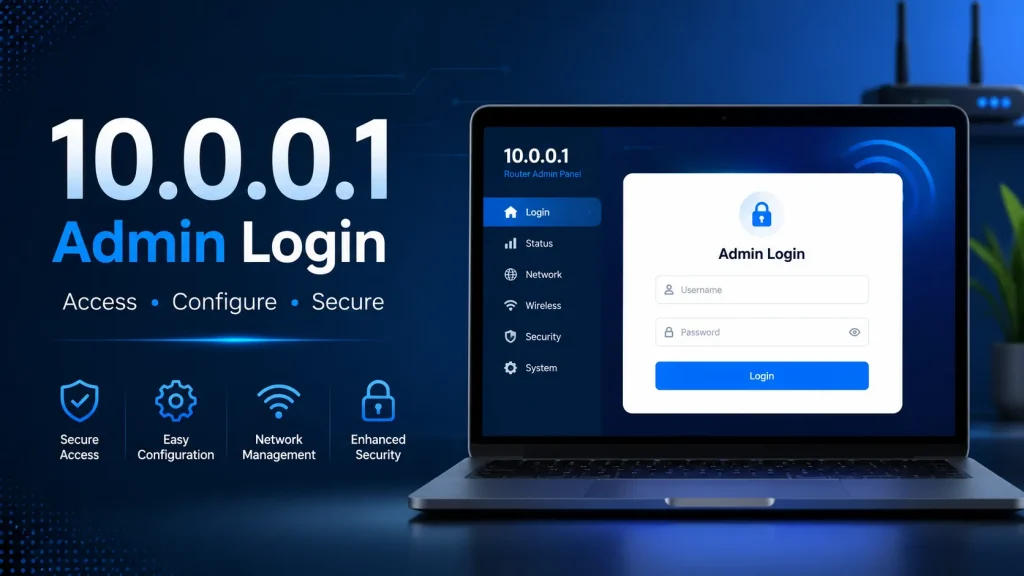
When you open the 10.0.0.1 Admin Login page, you will be asked to enter a username and password. These credentials protect your router or Piso WiFi dashboard from unauthorized access. The default login details vary depending on the router manufacturer or internet service provider, but many devices still use common factory credentials. If you have never changed the administrator login information, you can try one of the combinations below.
| Username | Password |
|---|---|
| admin | admin |
| admin | password |
| admin | (blank) |
| user | user |
| admin | 1234 |
If none of these combinations work, check the sticker attached to your router, read the user manual, or contact your ISP for the correct credentials. For better security, change the default administrator password immediately after your first login. Using a strong password helps protect your router from unauthorized access.
10.0.0.1 vs 10.0.0.0.1
Many users search for 10.0.0.0.1, but this address is incorrect.
| Incorrect | Correct |
|---|---|
| 10.0.0.0.1 | ✅ 10.0.0.1 |
The correct private IP address is 10.0.0.1. Adding an extra zero creates an invalid address that cannot open the router login page. If the login screen does not appear, double-check that you entered the IP correctly in your browser’s address bar.
Piso WiFi Login Using 10.0.0.1
The 10.0.0.1 IP address is widely used by Piso WiFi systems, allowing owners to manage internet access, user sessions, and network settings through a web browser.
After logging in, you can:
- Configure internet time.
- Manage vouchers.
- Enable or disable Pause Time.
- View connected users.
- Monitor bandwidth usage.
- Restart the Piso WiFi system.
- Change administrator credentials.
- Configure WiFi settings.
- Manage hotspot options.
- Update system settings.
This makes 10.0.0.1 Admin Login an essential tool for Piso WiFi operators who want complete control over their hotspot network.
Common Login Problems
Although logging in is usually simple, users sometimes experience problems when opening the 10.0.0.1 Admin Login page. Below are some of the most common issues and their solutions.
The Login Page Does Not Open
If the page does not load:
- Make sure you are connected to the router.
- Confirm the IP address is 10.0.0.1.
- Restart the router.
- Try another web browser.
- Clear your browser cache.
- Disable any active VPN.
Incorrect Username or Password
If your login credentials are rejected:
- Check the router label.
- Try the default username and password.
- Contact your ISP.
- Reset the router if necessary.
Browser Displays “Page Cannot Be Reached”
This usually means:
- The router uses another IP address.
- Your device is connected to another network.
- The router is turned off.
- The Ethernet cable is disconnected.
Forgot Administrator Password
If you cannot remember your administrator password, you can restore the router to factory settings. Press and hold the Reset button for about 10–15 seconds until the router restarts. After resetting, you can log in using the default administrator credentials.
Router Security Tips
Protecting your router is just as important as configuring it. A secure network helps prevent unauthorized users from accessing your internet connection or personal data.
Change the Default Admin Password
Never continue using the factory administrator password. Create a unique password that combines uppercase letters, lowercase letters, numbers, and symbols.
Enable WPA2 or WPA3 Encryption
Choose WPA2 or WPA3 as your wireless security mode. Avoid outdated options such as WEP because they are much easier to compromise.
Update Firmware Regularly
Router manufacturers release firmware updates to improve stability, fix bugs, and close security vulnerabilities. Check for updates regularly from the administrator dashboard.
Disable WPS
If you do not use WiFi Protected Setup (WPS), disable it. This reduces unnecessary security risks and strengthens your wireless network.
Monitor Connected Devices
Review the list of connected devices regularly. If you see an unknown device, block it immediately and change your WiFi password.
Benefits of Using 10.0.0.1 Admin Login
The administrator dashboard offers many useful features that help you manage your network efficiently.
Key Benefits
- Change WiFi Password
- Change Network Name (SSID)
- Configure Internet Settings
- Enable Guest WiFi
- Manage Connected Devices
- Update Router Firmware
- Configure DNS
- Improve Network Security
- Control Bandwidth
- Restart or Reset the Router
These features make it easy to maintain a secure, stable, and high-performing network for your home, office, or Piso WiFi installation.
How to Find Your Router’s IP Address
If 10.0.0.1 does not open the administrator login page, your router may be using a different default IP address. Fortunately, finding your router’s IP address is quick and easy on any device.
On Windows
- Connect your computer to the router.
- Press Windows + R.
- Type cmd and press Enter.
- Type the following command:
The Default Gateway is your router’s login IP address.
On Android
- Open Settings.
- Tap WiFi.
- Select your connected network.
- Open Network Details.
- Find the Gateway address.
On iPhone
- Open Settings.
- Tap WiFi.
- Tap the icon next to your connected network.
- The Router field displays your router’s IP address.
Related Router Login IP Addresses
Although 10.0.0.1 is commonly used for routers and Piso WiFi systems, many manufacturers use different default IP addresses.
| Router Login IP | Common Usage |
|---|---|
| 192.168.1.1 | TP-Link, ASUS, Linksys |
| 192.168.0.1 | D-Link, Netgear |
| 192.168.100.1 | Fiber Modems |
| 192.168.31.1 | Xiaomi Routers |
| 192.168.8.1 | Huawei Routers |
| 192.168.1.254 | Gateway Login |
| 192.168.10.1 | Router Configuration |
| 192.168.11.1 | Router Admin Panel |
If 10.0.0.1 does not work, checking your router model or default gateway will help you identify the correct login address.
Tips for Better Router Performance
A well-configured router delivers faster internet speeds, better WiFi coverage, and improved security. Follow these practical tips to keep your network stable, secure, and running smoothly.
Place the Router in a Central Location
Position your router near the center of your home or office to improve signal strength. Avoid placing it inside cabinets, behind furniture, or close to thick walls.
Restart the Router Regularly
Restarting your router every few weeks can refresh the connection, clear temporary memory, and resolve minor performance issues.
Keep Firmware Updated
Install the latest firmware provided by your router manufacturer to receive security patches, bug fixes, and performance improvements.
Use Strong WiFi Passwords
Create a unique password with uppercase letters, lowercase letters, numbers, and symbols. Avoid weak passwords such as 12345678 or password.
Monitor Connected Devices
Review the connected devices list regularly. If you notice an unknown device, block it immediately and update your WiFi password.
Frequently Asked Questions
Conclusion
The 10.0.0.1 Admin Login page provides complete access to your router or Piso WiFi administrator dashboard, allowing you to manage your wireless network with confidence. From changing your WiFi password and configuring internet settings to updating firmware and improving network security, the admin panel gives you full control over your home or office network.
If 10.0.0.1 does not open, verify that you are connected to the correct network and confirm your router’s default gateway. Many routers use other private IP addresses such as 192.168.1.1, 192.168.0.1, or 192.168.100.1.
By following the steps and recommendations in this guide, you can safely access your router, optimize your WiFi performance, strengthen network security, and resolve common login issues without unnecessary complications.